
Infant Nutrition for Hospitals
Why Human Milk Based Infant Nutrition Is Critical for Premature Babies
Background on Preterm Infant Nutrition
Preterm Infants must switch from placental nutrition to gastrointestinal absorption in order to survive outside the womb & recover from their prematurity. This transition is extremely difficult to manage clinicians but critical to developmental outcomes.
There are two key challenges:
- Supporting adequate nutrition volumes despite immature digestive capacity
- Avoiding gastrointestinal infections and allergies from foreign contaminants
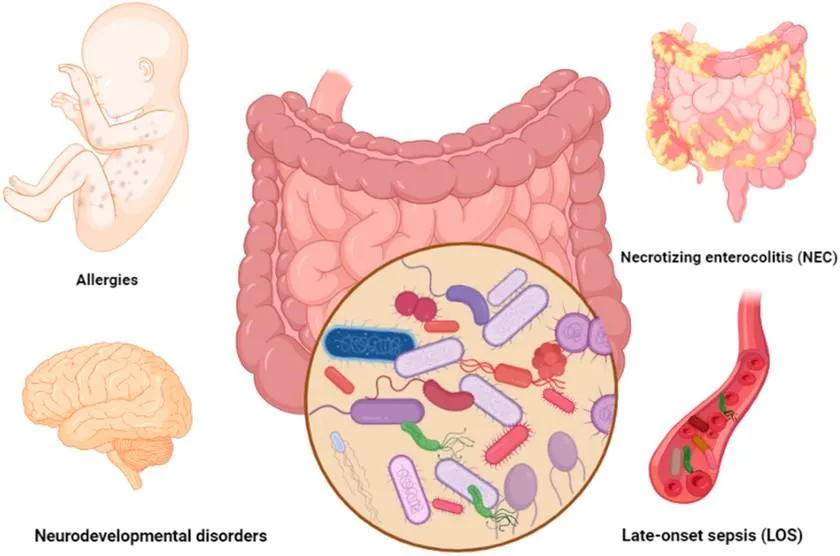
Many premature infants are unable to consume sufficient amounts of breast milk to meet their elevated nutritional requirements because their organs are too small. Therefore, it is an evidence based clinical practice to fortify breast milk with Human Milk Fortifiers (“HMF”) to increase breast milk’s nutritional density.
Traditionally, cow milk based fortifiers have been used but in recent years, Cow Milk has been proven to increase the risk for complications such as necrotizing entero-colitis (NEC), an acute inflammatory condition of the bowel that affects 6-7% of all premature infants and is also one of the leading causes of death among these infants.
The global medical consensus is that breast milk should be fortified with human milk based fortifiers to maintain an Exclusively Human Milk Diet (“EHMD”) in order to minimize gastrointestinal risks while achieving appropriate nutritional intake goals to help premature babies grow as they are intended.
Human Milk Diet Benefit Summary
Human milk is universally recognized as the best form of infant nutrition. In numerous research, exclusive human milk diet results in significantly better outcomes for premature infants across a large spectrum of complications.

- Lower Mortality Rates Compared to Bovine Milk
- Significantly Reduced NEC Incidence Rates
- Reduced Occurrence of BPD, ROP and Sepsis
- Faster Recovery Compared to Bovine Milk
- Lower Total Cost Compared to Bovine Milk
- Reduced Costs from Long Term Comorbidities
After controlling for confounding factors, infants fortified with Prolacta+ were found to have a 62~90% reduction in the odds of developing NEC compared with infants fortified with cow-based products
Feeding intolerance was significantly better compared to bovine groups. Ninety-four percent of preterm infants fed an EHMD never had feeds held compared with 66%, 37% and 66% for groups B, M and F, respectively.
Cost Benefit of EHMD Internationally
We estimate cost savings in Thailand by utilizing actual costs from a VLBW infant who was hospitalized in a private Bangkok hospital equipped with Level-IV NICU facility in 2024. Infant was hospitalized from 29wks gestational age due to mother’s Listeria infection and later discharged at 39wks gestational age.
| Category | Cost Savings | Notes |
|---|---|---|
|
Reduction in hospitalization -4.5 days x daily NICU cost of THB 57,835/day |
-THB 260,258 Savings |
Calculated from THB 4,106,258 over 71 days stay |
|
9 Fewer Days of TPN x average daily TPN cost THB 29,634/day |
-THB 266,710 Savings |
Calculated from THB 418,882 over 14 days of TPN |