
Prolacta
Prolacta – Nutritional Solutions for the Most Vulnerable Lives
Kaothanasap Co., Ltd. is pending approval by the Thai FDA to be the first and only authorized distributor bringing Prolacta’s 100% human milk-based solutions to Thailand.

Behind every product
Is a simple but profound mission: to give the most vulnerable newborns the best possible start in life – nourished by nature, supported by science.

Prolacta Bioscience
Is the global leader in the development and manufacturing of human milk-based products, trusted by NICUs worldwide.

Additional Prolacta
Products will be introduced progressively, and further regions across Thailand will be supplied step by step in the near future.
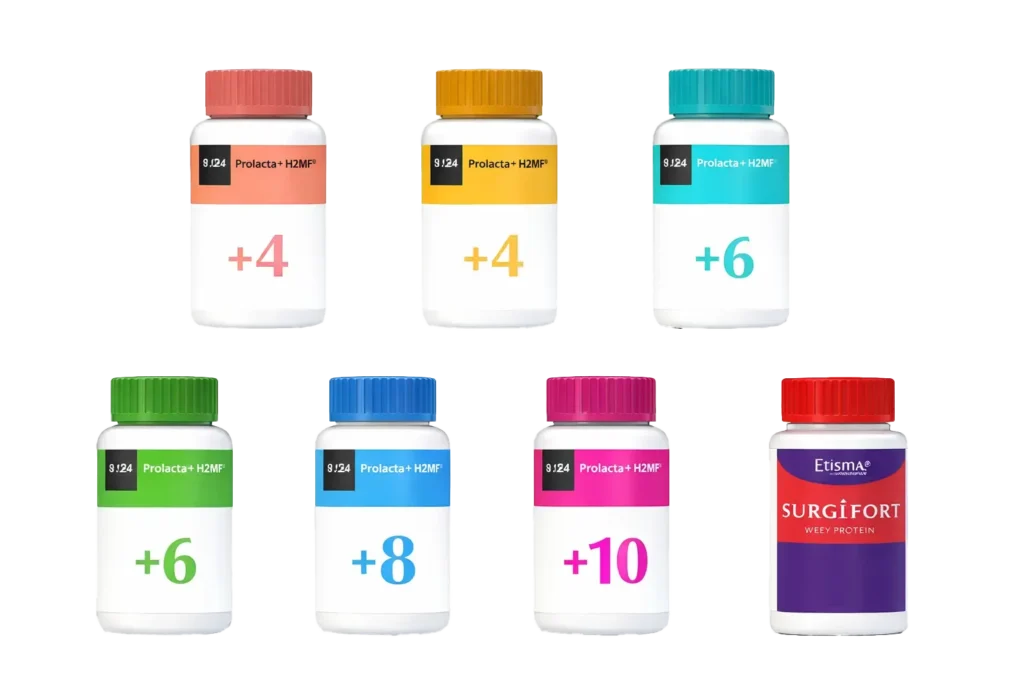
Prolacta+ H²MF®
Human Milk Fortifier
Prolact+ H2MF is the first commercially available human
milk fortifier made from 100% human milk.
- Intended for premature/low-birth-weight infants (weighing under 1500g at birth)
- Helps to ensure healthy gut, lung, and brain development, as well as achieve healthy growth
- Retains human milk oligosaccharide content similar to that of fresh human milk
Prolact RTF ™
Ready to Feed
Prolact RTF (Ready-To-Feed) offers Neonatal Intensive Care Units superior solutions for their extremely premature infants when mother’s own milk is not available.
Human Milk-Based Premature Infant Formula
- Provides an easy, convenient, labor saving way to provide 100% human milk-based diet when mother’s own milk is unavailable
- A more cost-effective way to provide an exclusive human milk diet comprised of Prolact HM® and Prolact H2MF®
- Reduces the chance of mixing errors and saves time
- Shorter duration of TPN for infants fed an Exclusive Human Milk-based Diet vs. cow milk-based preterm formula
- Significantly fewer surgical NEC cases for infants fed an Exclusive Human Milk-based Diet vs. cow milk-based preterm formula

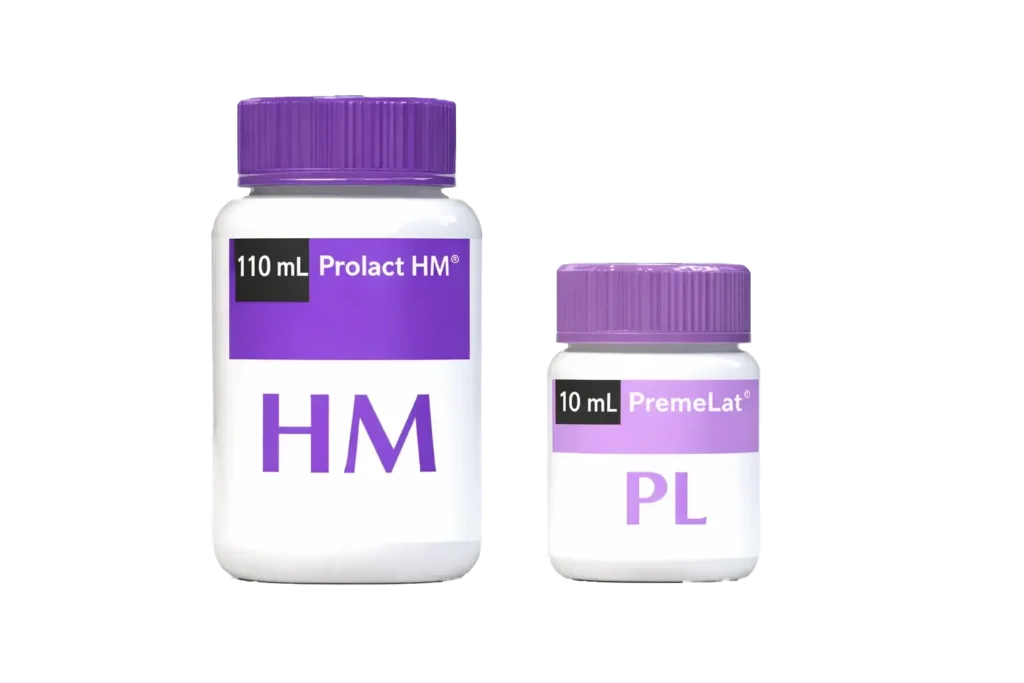
Prolact HM®
Standardized Human Milk
The benefits of breastmilk are well established,
and breastfeeding is highly recommended by
healthcare professionals.
Since 2012, the American Academy of
Pediatrics (AAP) has recommended the use of
human milk for all preterm infants, if MOM or
Donor Milk is unavailable.
Guaranteed supply
Only Prolacta offers a guaranteed supply of
donor human milk based on your NICU’s usage
forecast – that means no more worrying about
supply shortages.
Prolact CR®
Caloric Fortifier
Human milk caloric fortifier is ideal for neonatal infants receiving low caloric content. Data show that 65% of the time, term mother’s own milk (MOM) is less than 20 Cal/fl oz. Prolact CR human milk caloric fortifier can meet the need for additional calories.
- Intended for use with MOM or donor milk (DM) to increase lipids and achieve adequate growth
- Formulated to deliver at least 2.6 Cal/mL
- Available frozen in bottles containing 10 mL of product (4 bottles per unit carton, with 48-hour expiration)
- Includes simplified preparation instructions
- Easy to use and measure

Why Human Milk Based Infant Nutrition Is Critical for Premature Babies
Background on Preterm Infant Nutrition
Preterm Infants must switch from placental nutrition to gastrointestinal absorption in order to survive outside the womb & recover from their prematurity. This transition is extremely difficult to manage clinicians but critical to developmental outcomes.
- Supporting adequate nutrition volumes despite immature digestive capacity
- Avoiding gastrointestinal infections and allergies from foreign contaminants
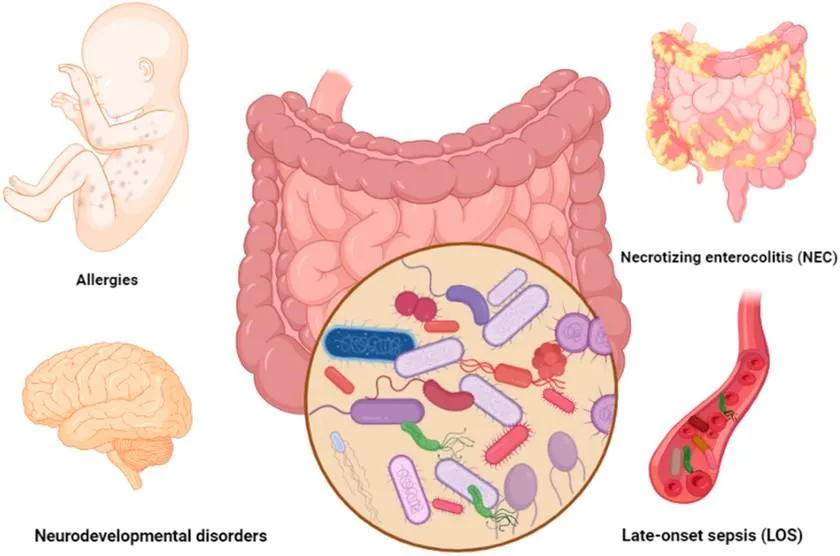
Many premature infants are unable to consume sufficient amounts of breast milk to meet their elevated nutritional requirements because their organs are too small. Therefore, it is an evidence based clinical practice to fortify breast milk with Human Milk Fortifiers (“HMF”) to increase breast milk’s nutritional density.
Traditionally, cow milk based fortifiers have been used but in recent years, Cow Milk has been proven to increase the risk for complications such as necrotizing entero-colitis (NEC), an acute inflammatory condition of the bowel that affects 6-7% of all premature infants and is also one of the leading causes of death among these infants.
The global medical consensus is that breast milk should be fortified with human milk based fortifiers to maintain an Exclusively Human Milk Diet (“EHMD”) in order to minimize gastrointestinal risks while achieving appropriate nutritional intake goals to help premature babies grow as they are intended.
Prolacta Bioscience History
Established: 1999 (125,000 infants served, approved in 17 countries)
Employees: 300 total (privately owned company)
Location: Los Angeles, California (two facilities)
Staff Base: Scientists from Human Blood Plasma Industry

Elena Medo
Prolacta Founder
Elena Medo is the founder of Prolacta Bioscience, a pioneering biotechnology
company focused on producing 100% human milk–based nutritional products
for premature and medically fragile infants. She established the company with
the mission of improving clinical outcomes in neonatal intensive care units
(NICUs), helping reduce life-threatening complications associated with preterm
birth. Under her leadership, Prolacta recruited industry veterans from the blood
plasma industry and developed the first commercially available human milk–
based fortifiers, advancing neonatal nutrition standards and influencing hospital
feeding protocols across the United States and internationally.
Medical Publications
| Ref No | Year | Journal | Author(s) | Title | Format | Study Findings |
|---|---|---|---|---|---|---|
| [4] | 2010 | Journal of Pediatrics | Sullivan S, et al. | An Exclusively Human Milk-Based Diet Is Associated with a Lower Rate of Necrotizing Enterocolitis than a Diet of Human Milk and Bovine Milk-Based Products | Multi center Randomized Trial | For extremely premature infants, an exclusively human milk–based diet is associated with significantly lower rates of NEC and surgical NEC when compared with a mother's milk–based diet that also includes bovine milk–based products. |
| [5] | 2013 | Journal of Pediatrics | Cristofalo EA, et al. | Randomized Trial of Exclusive Human Milk versus Preterm Formula Diets in Extremely Premature Infants | Multi center Randomized Trial | In extremely preterm infants given exclusive diets of preterm formula vs human milk, there was a significantly greater duration of parenteral nutrition and higher rate of surgical NEC in infants receiving preterm formula. This trial supports the use of an exclusive human milk diet to nourish extremely preterm infants in the neonatal intensive care unit. |
| [6] | 2014 | Breast Feeding Medicine | Abrams SA, et al. | Greater Mortality and Morbidity in Extremely Preterm Infants Fed a Diet Containing Cow Milk Protein Products | Combined Multi center Randomized Study | The percentage of diet from cow milk was significantly associated with the risk of sepsis (p = 0.00006). For each 10% increase in the intake of other than an exclusive human milk diet, there was a 17.9% increase in risk in sepsis. An exclusive human milk diet, devoid of CM-containing products, was associated with lower mortality and morbidity in EP infants without compromising growth and should be considered as an approach to nutritional care of these infants. |
| [8] | 2015 | Journal of Perinatology | Assad M, et al | Decreased cost and improved feeding tolerance in VLBW infants fed an exclusive human milk diet | Retrospective Cohort Study | Eight five percent of infants in group H (EHMD) had no BPD compared with 57 to 76% in the bovine and mixed group, respectively. Implementing an EHM diet in our VLBW infants has led to a significant decrease in the incidence of NEC. Other benefits of this diet include decreased feeding intolerance, shorter time to full feeds, shorter length of stay, and lower hospital and physician charges for extremely premature and VLBW infants. |
| [9] | 2014 | Infant, Child & Adolescent Nutrition | Huston RK, et al. | Decreasing Necrotizing Enterocolitis and Gastrointestinal Bleeding in the Neonatal Intensive Care Unit | Retrospective Cohort Study | Exclusive Human Milk (EHM) lowered the incidence of NEC compared with Preterm Formula (PTF) and NEC plus GIB compared with Donor Human Milk (DHM) and PTF. Using EHM in VLBW infants at higher risk of NEC appears to be cost-effective. |
| [10] | 2018 | Archives of Disease in Childhood – Fetal and Neonatal Edition | Visuthranukul C, et al. | Premature small for gestational age infants fed an exclusive human milk-based diet achieve catch-up growth without metabolic consequences at 2 years of age. | Single centre Longitudinal Cohort Study | SGA premature infants who received an exclusive HM-based diet exhibited greater catch-up growth without increased adiposity or elevated insulin resistance compared with AGA at 2 years of age. An exclusive HM-based diet may improve long-term body composition and metabolic outcomes of premature infants with ≤1250 g birth weight, specifically SGA. |
| [12] | 2018 | Nutrition in Clinical Practice | Huston R, et al. | Improving Growth for Infants <1250 Grams Receiving an Exclusive Human Milk Diet | Retrospective Cohort Study | Implementation of a standardized feeding protocol including earlier fortification of maternal milk was associated with improved growth for infants receiving human milk feedings. EHM significantly decreased NEC. Earlier fortification had no effect on NEC. |
| [16] | 2011 | Breast Feeding Medicine | Ganapathy V, et al. | Costs of Necrotizing Enterocolitis and Cost Effectiveness of Exclusively Human Milk-Based Products in Feeding Extremely Premature Infants | Health Economics Net Expected Cost Calculator | Extremely premature infants fed with an EHMD had lower expected NICU length of stay and total expected costs of hospitalization, resulting in net direct savings of 3.9 NICU days and USD $8,167.17 per extremely premature infant (p-value <0.0001). |
| [17] | 2016 | Breast Feeding Medicine | Hair AB, et al. | Premature Infants 750–1,250 g Birth Weight Supplemented with a Novel Human Milk-Derived Cream Are Discharged Sooner | Combined Multi center Randomized Study | Very preterm infants who received an HM-derived cream supplement were discharged earlier. Infants with BPD may have benefited the most. |
| [26] | 2013 | BMC Research Notes | Hair AB, et al. | Human milk feeding supports adequate growth in infants ≤ 1250 grams birth weight | Single center Prospective Observational Cohort Study | A feeding protocol for infants ≤ 1250 g BW providing an exclusive human milk-based diet with early and rapid advancement of fortification was associated with weight gain exceeding targeted standards and with length and HC growth meeting targeted standards. Infants had a lower rate of extrauterine growth restriction compared to historical literature. |
| [27] | 2014 | Journal of Pediatrics | Hair AB, et al. | Randomized Trial of Human Milk Cream as a Supplement to Standard Fortification of an Exclusive Human Milk-Based Diet in Infants 750-1250g Birth Weight | Prospective Noninferiority Randomized Unmasked Study | Premature infants who received HM-derived cream to fortified HM had improved weight and length velocity compared with the control group. HM-derived cream should be considered an adjunctive supplement to an exclusive HM-based diet to improve growth rates in premature infants. |
| [28] | 2012 | BMC Pediatrics | Ghandehari H, et al. | An Exclusive Human Milk-Based Diet in Extremely Premature Infants Reduces the Probability of Remaining on Total Parenteral Nutrition: A reanalysis of the data | Multi centre Randomized Clinical Trial | A completely human milk-based diet significantly reduces the likelihood of TPN use for extremely premature infants when compared to a diet including cow-based products. This likelihood may be reduced even further when the human milk fortifier is initiated earlier in the feeding process. |
| [29] | 2018 | American Journal of Clinical Nutrition | O'Connor DL, et al. | Nutrient enrichment of human milk with human and bovine milk–based fortifiers for infants born weighing <1250g: a randomized clinical trial. | Blinded Randomized Clinical Trial | Fewer infants in the HMBF (Human milk based fortifier) group had severe ROP (1.6%) than in the BMBF (Bovine milk based fortifier) group (10.2%) [risk difference: −8.6% (95% CI: −16.9%, −0.02%); p =0.04]. |
| [32] | 2019 | Nutrition in Clinical Practice | Sato R, et al. | Necrotizing Enterocolitis Reduction Using an Exclusive Human-Milk Diet and Probiotic Supplementation in Infants With 1000–1499 Gram Birth Weight. | Single center Retrospective Study | Quality-improvement initiatives utilizing an exclusive human-milk diet and daily probiotic supplementation were associated with a decreased incidence of NEC in infants with a birth weight of 1000–1499g. |
| [33] | 2017 | Breast Feeding Medicine | Sandhu A. et al | Human-Based Human Milk Fortifier as Rescue Therapy in Very Low Birth Weight Infants Demonstrating Intolerance to Bovine-Based Human Milk Fortifier. | Retrospective Case Series | Very low birth weight and preterm infants with GI intolerance to BHMF (Bovine Human Milk Fortifier) were successfully rescued with use of HMHMF (Human Milk Human Milk Fortifier). Improvements in growth were achieved without need for supplementation with PN through achievement of sufficient enteral calorie and protein intakes. |
Safety Best Practices
Prolacta Biosciences has been prioritizing safety since 1999.
- Fully USA FDA Approved Process.
- No adverse effect incidents occurred in their entire 20 year history
- Scientists and Standards from the Human Blood Plasma Industry
- Physical Separation of Incoming Inspection and Production facilities